Topmost Tourist Attractions to Visit in Cox’s Bazar
Feeling monotonous of your daily routine? Want to get rid of this monotony? Well, all that you need is a break and in the meantime you can visit world’s longest sea beach Cox’s Bazar. You can dive into the Bay of Bengal, can play a beach volleyball match on the golden sea shore or can have a fruit cocktail or delicious seafood. Here we have all the arrangements for your enjoyment.
Cox’s Bazaar is the tourist capital of Bangladesh. Sloping down to the blue water of the Bay of Bengal against the picturesque backdrop of a series of hills covered with dense forest, Cox’s Bazaar sea beach is the longest sea beach in the world. It’s total length is 120km. Located 150 km south of Chittagong, this place got its name from Captain Hiram Cox, an officer of the British East India Company. It is the place of miles of golden sands, lofty cliffs, surfing waves, amazing conch shells, beautiful pagodas, Buddhist temples and tribes and mouth watering sea foods.
The shark-free beach has its own reputation for bathing, sunbathing, swimming and surfing. The breathtaking beauty of the setting sun behind the vast sea is fascinating. Visits to the beautiful places like Himchari, Teknaf, Inani Beach, Buddhist temples at Ramu and islands such as Sonadia, St. Martin and Maheshkhali can make your journey memorable.
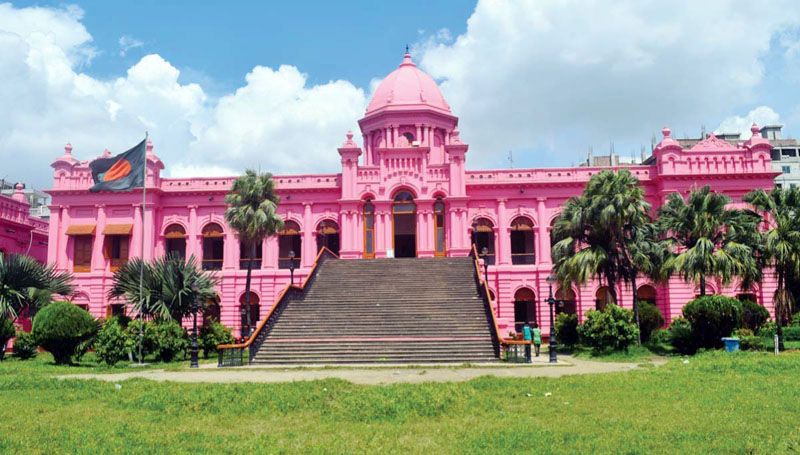
Once the official residential palace of the Nawabs of Dhaka, now Ahsan Manzil or the Pink Palace is a museum and one of the most visited places in Dhaka. The 5.5-acre premise of this palace bears the significance as an architectural reminder of the elite life of the Nawabs of Dhaka during the colonial era of 19th and early 20th century. In 1872, the patriarch of the Nawab family, Abdul Ghani (1813-1896), constructed the family’s official residence on the bank of the River Buriganga in old Dhaka and named the palace after his son Nawab Khwaja Ahsanullah (1846-1901). It’s mostly European styled building mixed with some decorative Indian motifs. Its soaring dome appears to be more about impressing the viewer on the exterior, rather than within the interior.
Many important persons of the Colonial period either visited or stayed here. Viceroy Lord Nathaniel Carson was one of them. He stayed here as a guest of Nawab Salimullah Bahadur in 1904. In 1906 Muslim leaders from all over India congregated at the Durbar Hall of Ahsan Manzil for the 20th Session of the All India Mohammedan Educational Conference in Dhaka.
Tourist Attraction in Bangladesh
In the same year here the All India Muslim League was formed that later lead the creation of Pakistan-when the British left the Indian subcontinent in 1947. 16 years after its erection, it was damaged by a cyclone. After its reconstruction, the palace became grander than before. After the death of the Nawab and his son, the family fortune was dispersed and the palace eventually fell into disrepair.
As the influence and the prestige of the Nawabs declined in the 20th century and the descendants of the Nawabs became too poor to look after such a vast property, The then Government took over this palace in 1952. However, the poor descendants of the Nawab family and the poor local people continued to hold the palace until the 1970s. They inflicted much harm to the building by indiscriminately altering its configuration. In 1985 the Government of Bangladesh acquired the property and after much deliberation decided to convert it into a national museum. The preservation work completed in 1989 and Ahsan Manzil started its journey as a museum in 1992.
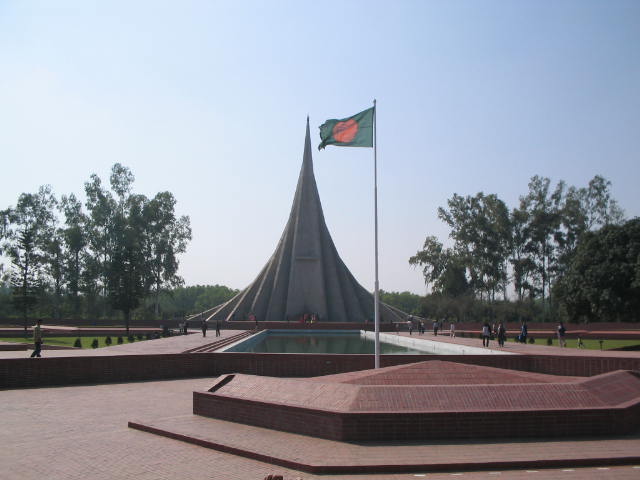
National Martyrs Memorial or Jatiyo Sriti Shoudho is the national monument of Bangladesh, erected as an iconic structure in the memory of those valiant sons and daughters who laid down their lives in the Liberation war of 1971. This monument is situated at Savar, about 35km northwest of Dhaka. Architect Moinul Hossain designed the monument. The whole complex area is of about 84 acres which are surrounded by a green belt of about 24.7 acres. Some mass graves and a water body is located in front of the monument. From the main entrance, visitors get a strong axial view of this structure. To reach to it one has to cross jagged and uneven path and a manmade lake by a bridge that symbolizes the nation’s difficult path to independence and the troublesome journey lies ahead.
Tourist Attraction in Bangladesh
Visitors can watch this monument from different perspectives and one can enjoy its dramatically differing configurations depending on the viewing location. From the front, the monument appears to be a single structure but in reality, it is composed of seven standing isosceles triangular concrete plates. Each of these plates varies in size and height from others. The highest plate has a smaller base and the broadest base has the lowest height. These plates are folded in the center at a 90 -degree angle and this unique configuration help this structure to change its configuration when viewed from different angles. This wonderful structure tells the story of a nation’s journey to independence. For its amazingly choreographed architecture, it is considered to be one of the finest monuments in the world.
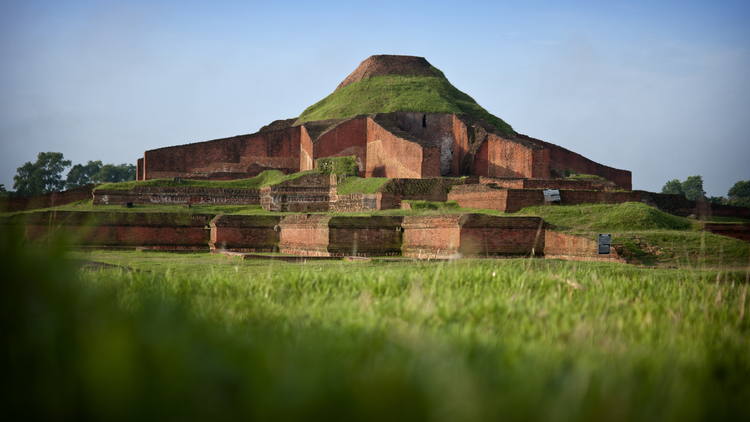
Sompur Mahabihar or Paharpur Buddhist Vihara is one of the largest well known Buddhist Bihar’s in the Indian Subcontinent and one of the most popular tourist destinations in the country. This very important archaeological site was designated as a UNESCO World Heritage Site in 1985. The Bihar is located at Paharpur village, Badalgachhi Upazila in Naogaon District.
This Buddhist Monastery is famous for its unparalleled architectural design. The wonderful terracotta plaques of the then musicians, snake charmers, different types ofanimlas are the key attractions to see. The outer walls of the temple are decorated with the lifestyle plaques of ordinary folks of hundreds of years.
From the excavation work and the inscriptions found on the seals, it has been found that Sompur Mahavihara was built by the second Pala king Dharmapala (782-821) of Pala Dynasty. Other sources say that it was built by Dharmapala’s successor Devpala (circa 810-850) after his conquest of Varendra. The monastery got its first renovation work during the reign of Mahipala (circa 995-1043AD). Then in the 11th century, the monastery was destroyed by fire during a conquest by the Vanga army. After about 100 years Vipulashrimitra rebuilt the Bihar and constructed a temple of Tara.
In the second half of the 12th century, during the reign of the Sena Dynasty, the Bihar started to decline and was ultimately abandoned during 13th century when Muslim invaders occupied this place.
Buddhist Monks used to meet here to discuss on different subjects apart from Buddhism. The Monks from China, India, Japan and other parts of the world come to exchange their studies on culture, politics, arts and other faculties.
Famous Buddhist scholar Atisha Dipankar Srijnan resided here for many years and interpreted Madhyamaka Ratnaprodipa into Tibetan.
Area
This 7th-century archaeological site covers nearly an area of 27 acres of land. The monastery is a large square quadrangle measuring nearly 920 feet. Its main entrance is on the northern side. The outer walls of the monastery are built by a series of cells (total 177 cells) that face toward the main shrine. The central shrine has a crisscross ground plan and a terraced structure that ascend in three terraces to a peak of about 70 feet. The upper level is a large rectangular central block.
This archaeological site remained hidden under grass and stones for centuries after the monks abandoned it in the 13th century. Locals thought this elevated place to be a hill. Thus the name Paharpur came. The complex that was discovered under the rubble had 177 monastic cells, a water pit, a kitchen, and various stupas.
The museum of Paharpur Buddhist Vihara is a major attraction to the visitor. Hundreds of archeological things, bearing historical values of that time are displayed here on different show cases. This museum is situated at the footstep of Paharpur Bihar territory. There are three galleries inside the museum building and hundreds of objects collected from Paharpur monastery are displayed on these galleries. During your visit here you might feel that you have lost yourself in the 12th century.
Others:
To enjoy the architectural beauty of Paharpur Bihar is a great opportunity. Taking pictures of this great archaeological site will be a memento for you. If you go there in a group you can enjoy a picnic there.
How to Go:
Paharpur Buddhist Vihara is about 282 km away from Dhaka. One can go to Paharpur from Dhaka by both bus and train. Going to Paharpur is a two-phased journey. Paharpur is accessible from both Joypurhat and Naogaon district. One can first go to Joypurhat or Naogaon from Dhaka by bus. Both A/C and non-A/C bus service is available. It takes 6 hours to reach in Joypurhat and 6.5 hours to reach in Naogaon. Then by rickshaw or auto-rickshaw, you can go to Sompur Vihara. You can also go there by private taxi or car.
Where to Stay:
There is a guesthouse at the Bihar arena. If you are enough lucky you can get your reservation. From here you can enjoy the charming beauty of the Bihar at night especially in a moonlit night. If you don’t get any room here then there are many hotels and rest houses in Joypurhat and Naogaon town. You can book a room here in a cheap or expensive hotel according to your budget.
Food:
There is no signature food here that tourists can enjoy. Hotels and rest houses supply typical Bangladeshi foods. If you stay in the guest house at Paharpur you will enjoy the eating facilities here but if you go from Joypurhat or Naogaon then you have to carry your own food. There are some food chains and restaurants near the Bihar arena but they will not do enough to satisfy your hunger.
Drinks:
Fresh water and cold drinks are available in the shops. Tea and coffee are also available.
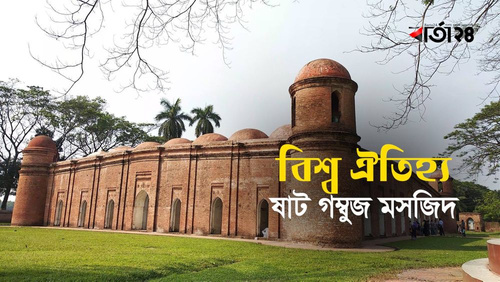
The Shat Gambuj Mosque is a UNESCO World Heritage Site and one of the topmost Tourist Attraction in Bangladesh. It is one of the largest historical mosques of the Sultanate period. The great Ulugh Khan Jahan established this mosque three miles west of the present Bagerhat town. This serene and imposing monument stands on the eastern back of an enormous sweet-water-tank. The mosque is famous for its sheer size and architectural beauty.
The archaeological elegance of it enthralls the tourists even now. The simple look of this aristocratic structure with its absolute plainness but solid shape reflects the potency and simplicity of its designer. Besides using it as a prayer hall, Ulugh Khan Jahan used the mosque as his assembly hall. Beside this mosque, there is an archaeological museum where you can find different archaeological and historical materials of that time.
Discovering the Land of Hills and Clouds, Sajek Valley
Discovering Sajek Valley:
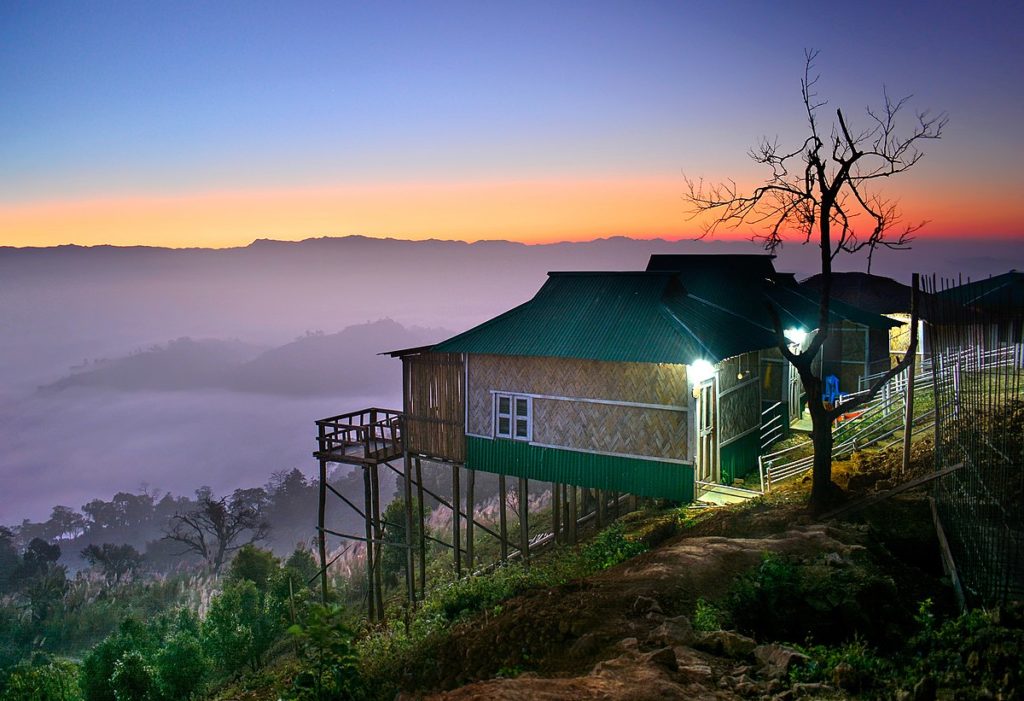
Discovering sajek valley is one of the topmost tourist destinations in Bangladesh. Located among the hills of Kasalong range of Baghaichhari Upazila in Rangamai District, this place is about 1800 feet above the sea level. It is known as the queen of hills and roof of Rangamati. Sajek valley is 80 km away from Khagrachari town and 90 km northwest from Rangamati town. It is only 8 km away from Mizoram, India. It’s lush green, scenic beauty of hills, wilderness, the opportunity of playing with clouds attract the tourist to come here. To enjoy its natural beauty every day thousands of the tourists come here.
Tourist Attractions in Cox’s Bazar
No word is enough to define the beauty of Sajek Valley. The deep forest, grassland, hilly areas make it a wonderful tourist spot and one of the best choices among the traveler, adventure lover and digital nomads. At the peak of the Discovering sajek valley, you will see the passing clouds around you even you can touch them. This picturesque beauty will make you feel the view of heaven on earth. The curvy hilly roads, small rivers among the hills make this place thrilling. The weather of Sajek changes frequently.
The local people are very amicable and hospitable. Most of them are of different ethnic minorities. Among them Chakma, Marma, and Tripura are mentionable. Their families are maternal. Women are the head of the family. From the very starting of the journey, the Bangladeshi Army ensures the protection of the tourists. So there is no question about the security.
Top Tourist attractions:
The route of Sajek valley
Source: tripadvisor.ie
This road will give you one of your life’s most memorable journeys. The serpentine road through the hills is enchanting. In some places, these roads are too high on the hills that when the vehicles start to ascend you’ll feel the lower part of your body start disconnecting from the upper part. After a while when the vehicle goes down from the upper hill, you’ll experience the opposite feeling. After continuous ups and downs, at last, you’ll arrive at Sajek Valley
Sunset from the Helipad:
Source:www.flickr.com/photos/eliasinul/
There is a helipad on the valley and you can enjoy the red glow of setting sun from this place. Lots of tourists come here to enjoy this natural phenomenon. They walk, gossip, take photos and sing loudly here. Sometimes tourists pass time here even after sunset. Standing at the edge of the mountain for a long time they enjoy the surrounding nature.
Sunrise in the hills:
Another thing that will mesmerize you here is the sunrise. Get up early to experience the wonderful sunrise. As the hills are covered with clouds, when the sun rise it may seem that it is coming out of cloud. When the sun comes out of the cloud completely and shines all over valleys you will feel a heavenly feeling. Just close your eyes, keep calm and quiet, take long breath and feel the whole phenomenon. I’m sure that you will think life is beautiful.
Konglakpara:
After experiencing the wonderful sunrise you can go out to get introduced with the local people’s life style. Konglakpara is a nearby locality on Konglak Hill. To go there you have to trek 30-40 minutes. Konglak hill is not hard to trek and even if you have no previous experience of trekking, you will be able to climb the hill easily. From Konglak hill you will be able to see the scenery of India borders, the clouds, the surrounding hills, Sajek valley etc. Here you will know about the local people’s lifestyle. There are some orange gardens in this hill. You can buy banana and papaya from the local people. They are cheap and delicious.
Sikam Toisa Water Fall:
Source:plus.google.com/106073606109061296987
Also known as Komlok Waterfall or Pidam Toisa Waterfall, this waterfall is really difficult to reach. A steep hilly road on the right side of Ruilui Para- Helipad road leads to this waterfall. You have to trek very steep hilly road, somewhere 80-85 degrees to reach there. Inexperienced and bulky people are requested to avoid this waterfall but if you have experience of trekking hills and if you love to explore then this wonderful waterfall is for you.
Discovering sajek valleyHow to go:
Sajek valley is located at Rangamati but people like to visit Sajek via Khagrachari. Both A/C and non-A/C bus service is available from Dhaka to Khagrachari. The journey takes 7 hours. From Khagrachari you can go to Dighinala by a CNG driven vehicle or four-wheeler. These vehicles will take you to Baghaichari Bazar and then the valley through Dighinala. If you want to go to Dighinala from Dhaka directly then you can go by Shanti Paribahan.
Where to stay:
The whole valley is full of hotels and resorts. These resorts are controlled by Bangladesh army and Bangladesh Border Guard. Here you will find both cheap and expensive options to stay according to your budget. From these hotels and resorts you will find the wonderful picturesque beauty of this valley.
Food:
There is no signature food that can be enjoyed by the tourists here. Chickens and vegetables are available. Tourists can enjoy pork but don’t expect beef here. There are some halal restaurants for the Muslims. Cakes, biscuits and other snacks are a bit costly here.
Drink:
There are coffee shops here and they make coffee really nice. Tourist can enjoy the brewing coffee and recharge themselves for trekking hills.
Some Important Information:
You can visit Discovering sajek valley all around the year. Bu,t as the clouds and sudden rain is the main attraction of this valley so it’s wise to visit in the rainy season. From June to September is the best time to visit here. As there are some reports of some malaria cases, it’s wise to carry mosquito repeller. As there is no supply of electricity here, tourists are suggested to carry power banks for their mobiles and extra battery for their cameras.
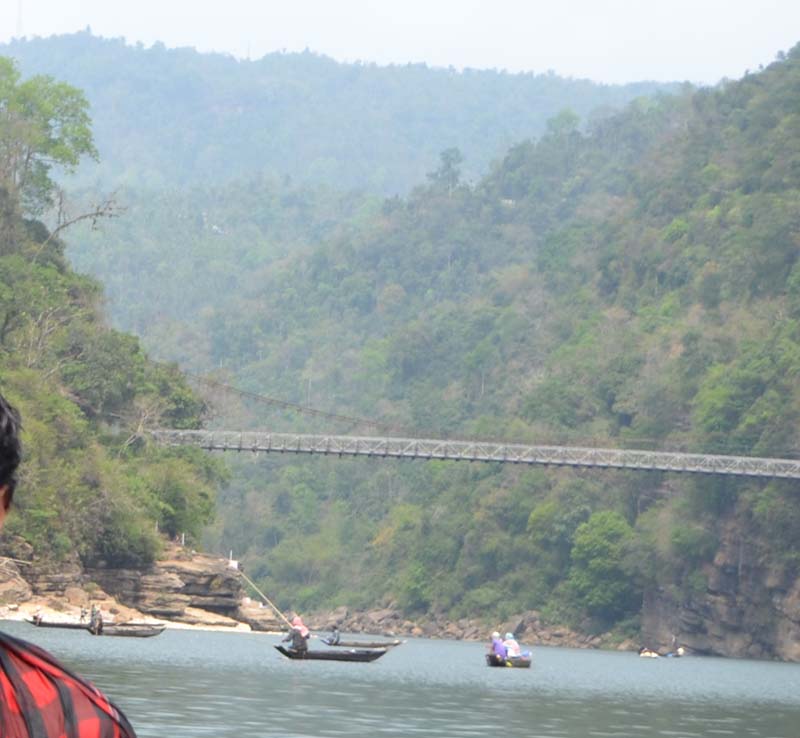
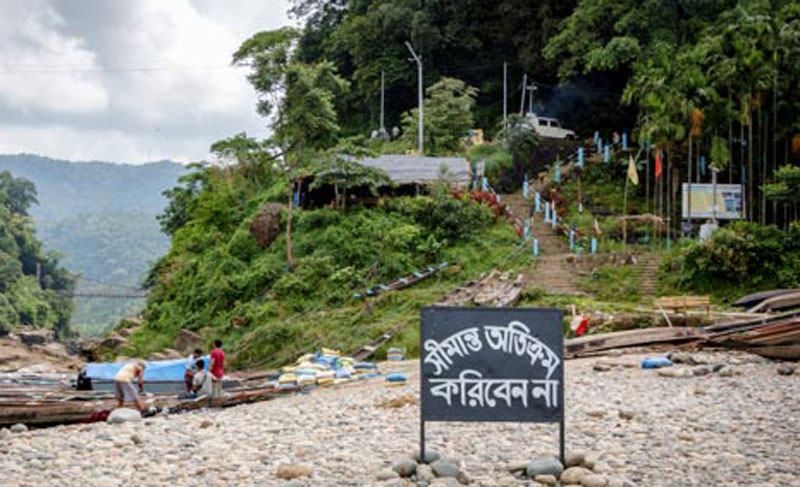
Situated at the border between Bangladesh and Indian state Meghalaya, Jaflong is one of the most Tourist Attractions in Jaflong destinations in Sylhet. Overshadowed by subtropical mountains and rain-forests, this place is about 60 km from Sylhet town. This scenic spot is situated on the river Piain. Its landscape beauty among gardens and hills enchants the tourists. The Mari River coming from the Himalayan Mountain range brings tons of stone boulders with its stream. This place is famous for its stone collection activities. It is the home of the Khasi tribe. Tourists come here mainly in winter to see the stone collecting process but during monsoon, Jaflong reveals its different type of beauty with numerous falls cascading from lush green mountains. The amazing beauty of white clouds and gushing waterfalls streaming from the green mountains enthrall locals as well as tourists.
To See
Zero point:
It is actually the no-man’s-land between India and Bangladesh. From here you can enjoy the best panoramic view of the Meghalaya hills. You can also have the best view of the river Piain from here. The iconic picture of Jaflong which is seen everywhere is a bridge between two hills and this place is only a little distance from the zero point. You can go there on foot when water flows low. But in the rainy season, the water level becomes high and then you can hire a boat from Bolla Ghat to go there.
Piain River:
The river comes from the hills of Meghalayas and flows through Bangladesh. Numerous waterfalls of the hilly area are the contributor of this river. The river fetches a lot of stones with its flow. From the river you can have the stunning view of the hills of Meghalayas.
Sengram Punji Waterfalls:
Nearly 700 meters west of the Zero Point, there is a waterfall on the hills of Meghalaya. During winter, when the water flows low you can cross the river on a boat and walk to the waterfall. But in Rainy season you have to hire a boat to reach this place. Though this beautiful place is in Indian Territory, Bangladeshi tourists can go there and enjoy the scenic beauty of this stunning waterfall. To enjoy it’s full form you have to visit this waterfall during the monsoon.
Khasia Village:
This is the abiding place of the Khasia pople. Their main occupation is to produce betel leaves and betel nuts. They live in their unique designed house. This village is situated on the opposite side of the Sengram Punji Waterfall. During dry season you can go there on foot and in the rainy season you must hire a boat to reach this beautiful village.
Jaflong Bridge:
The bridge connects the two sides of the river Piain. From this solid infrastructure, you can have the magical look of river Plain and the hills of Meghalaya surrounding the whole Jaflong. It is the best Tourist Attractions in Jaflong to spend your evening in Jaflong.
Stone Collection Activities:
Stone collection and its processing is the main business here in Jaflong. Majority of the people of this region are somehow connected to this process. Some people gather stones from the river, some buy from them and sell to the crushing companies and these companies make them tiny pieces suitable for constructing works and supply these stones to all over Bangladesh by trucks.
Stone Crushing Yard:
When you will enter Jaflong you’ll have the view of the stone crushing yards spread through miles. People carrying stone on their heads to the crushing machines is a regular view here. Heaps of stones are stored outside every yard. Crushing machines are breaking these stones into small pieces . All these things make this place noisy and full of activity. If you advance further you’ll see the stone gathering activities.
How to Go:
Jaflong is 315 km away from Dhaka and 60.7 km away from Sylhet. Journey to Jaflong from Dhaka is a two-phased one. First, you have to reach in Sylhet from Dhaka and then you have to go to Jaflong from Sylhet. From Dhaka, you can go to Sylhet by three types of transportation: bus, train, and air. A/C and non-A/C buses are available from Sayedabad Bus Terminal. Different Train leaves for Sylhet from Kamalapur Railway Station and if you have a shortage of time then you can go by plane from Shahjalal International Airport. From Sylhet, you can go to Jaflong by bus or CNG auto rickshaw. Tourist Attractions in Jaflong takes two hours to reach in Jaflong from Sylhet.
Where to Stay:
There are some good hotels to stay here in Sylhet town. Most of them are located at the Mazar road, Amberkhana or Zindabazar.
Food:
Eating facilities are available here at reasonable price. Local restaurants serve delicious foods and beverages. You can find quality food here in different resorts. Though the food here is a bit expensive, it is not much compared to its quality. You can also find many restaurants in Ballaghat that serve decent food on local standard.
Drink:
You can buy bottled mineral water and different beverages from the nearby shops.
Some Useful information:
The best time to visit Jaflong depends on what you want to enjoy. If you want to enjoy the natural beauty of Jaflong then it’s wise to visit there during monsoon (July- September). If you want to see the stone collecting process and photographing it then you should go there during Winter(October- May) because there will be no stone collecting process during monsoon.
Kuakata sea beach Known as Sagar Kannya or the Daughter of the sea, Kuakata is famous for its panoramic sea beach. This 18 km long and 3 km wide sea beach is located at Kalapara Police Station of Patuakhali district. Kuakata sea beach about 320 km from Dhaka and 70 km from Patuakhali Sadar. It is a unique place where you can witness both sunrise and sunset unobstructed. This beach is a lovely combination of picturesque natural beauty, blue sky, sandy beach, vast bay, and evergreen jhaubon. Here one can see 100 years old Buddhist temple and two wells of about 200 years old.
History:
In 1780s Rakhaines settlers came here after being expelled from Arakan (Myanmar) by the Mughals. To collect fresh water, they used to dig wells on the seashore. As the Bengali word for “well” is kua, this place got its name Kuakata.
To See:
Sun Rise and Sun Set:
Source:www.ontaheen.com/kuakata-hotel-tour/
You can enjoy the full view of the amazing sunrise and sunset from the same sandy beach in the Bay of Bengal.
Jhaubon:
Source:www.tripadvisor.com
This forest is a man made one and it is the result of initiative taken by the government of Bangladesh. Located at the walking distance from the beach Jhaubon is covered by Jhau and coconut trees. From here you can enjoy the amazing sunrise. There is an eco park here where many people come for picnic.
Gangamoti or Gajamati forest:
Source:www.daily-sun.com
Gangamoti canal is the last point of the sea beach. This is the beginning point of Gangamoti or Gajamoti forest. You can go there on foot or by bike along the beach. Visiting Gangamati in the afternoon will make a memorable experience in your life. You may see here the rare species of moorhen (a type of water bird).
This island is on the west side of the sea beach. Accessible by boat and trawler this place is a mangrove forest and actually a part of Sundarbans. It is also called Fatrar Bon. Tourists can enter the forest after taking permission from forest camp. Here, you can see wild birds, monkeys, rabbits, deer and some other animals.
Mishripara
Source:www.flickr.com/photos/57325069@N08
This charming Rakhain village is 9 km northwest of Kuakata. Here you will see a rural Buddhist temple which is the biggest in the subcontinent. There is a 30 feet high statue of Buddha in the temple. You can hire a motorcycle to visit this Rakhain village.
This place is located 4 km west of Kuakata. Here tourists can see the process of making dry fishes. Generally, in winter season fishes are dried to make shutki. From here shutki or dry fish is supplied in many places of the country, especially in Dhaka.
Narikel Bagan:
Source:ww.flickr.com/photos/arifbd111/
This nice place is situated at the eastern side and not so far from Kuakata sea beach. It is at the walking distance from the main beach. Local people think that this coconut garden is more than 40 years old. Now major part of this garden has been destroyed by the waves of the sea but still now there is a part where can tourist go and enjoy the beauty of this place.
Lebur Char:
Source:www.tripadvisor.co.za
This place is situated 5 km east of Kuakata beach. This 1000 acres place of natural beauty is locally known as Lembur char. Once Lebur Char was a part of the Sundarbans but now it’s detached from the Sundarbans. Here tourist will see trees like Keura, Geowa, Goran, Golpata, Koroi etc. you can visit this place easily by motorcycle and Zip-car.
Pilgrimage
It is the pilgrimage for both Hindus and Buddhists. Hindus come here at the festival of Rush Purnima and Buddhists come here at Maghi Purnima. On these occasions, pilgrims take holy bath at the bay and take part in the traditional fair.
How to go:
To go to Kuakata from Dhaka, you have to reach in Barisal first. You can go to Barisal by road air and water. Non-stop A/C and non-A/C bus service is available from Dhaka to Barisal. It takes 10-12 hours to reach in Barisal by bus. Launches and Paddle Steamers also go to Barisal from Sadarghat. If you have enough time then you can enjoy the launch journey. On the journey you will be able to enjoy the picturesque panoramic beauty of the rural Bengal. If you are out of time then you can go to Barisal by plane. From Barisal you can go to Kuakata by bus or rent cars. It will take 5-6 hours due to bad road condition.
Food:
The major hotels offer Indian and Chinese foods besides Bangladeshi dishes. But you can try some local seafood prepared in a different way. You can get freshly caught fishes like coral, Lakka, prawn, poa, hilsa, and crustaceans like crabs and lobsters in most offood chains near the main road. In Lebur Char, you will find some barbecue stands where you will be served fresh fish and crab cooked in front of you on the beach. Before ordering anything first confirm the price.
Drink:
You will find plenty of green coconuts here to drink and the price is very cheap. Hard drinks are available in the major restaurants.
Shopping:
There are two small markets in Kuakata: Beach Market and Rakhain Market. The market next to the beach area is popular among the tourists. The shops in the market are very small in size. Here they mainly sell different types of products such as clothes, shoes and souvenirs. Different types of Souvenirs are mainly made from wood, glass and sea shells. Here you can also buy clothes and other items made by the Rakhain community in the Rakhain Market.
Where to stay:
The major hotels offer well decorated accommodations, panoramic view of the Bay of Bengal, good security, excellent room service, hot and cold water facilities and all type of modern facilities for the tourists. But these hotels can be really expensive for you. If you think so you can find some modest hotels which will suit your spending plan easily. Most of the hotels provide easy access to all parts of the city, beach and tourist attractions which is very convenient for the travelers.
Visiting St Martin, The Amazing Coral Island in Bangladesh
Lying back on a beach chair, staring at the night sky studded with the radiant moon or millions of twinkling stars want to experience crisp sonic sounds of sea waves then st. martin’s island is the right place to calm down your soul.
The St. Martin’s Island also known as Narikel Jinjira (an island of coconut) and Parachinar Deep (an island of cinnamon) is one of the most visited tourist spots in Bangladesh. The only coral island in Bangladesh is about 8 km in length and rarely more than 1km wide. It is about 10 km (6mi) south-west of the southern tip of the Cox’s Bazar-Teknaf peninsula. Beaches fringed with coconut palms, panoramic beauty of the island and pristine marine life attract the tourists. Magnificent landscapes, crystal clear sea water, coral colony, and the roar of the Bay of Bengal are the main attraction of the visitors.
Tourists come here to soak up sun rays and roaming in lonesome seclusion on the sea beach enclosed by corals and crystal clear water of the sea. Far from the noisy environment of the city life, the tranquility of this island will help you to pacify your soul. To enjoy sensing and sighting the beauties of darkness with no electric lights around the blurry vision encourage many tourists to stay here overnight. If you stay here overnight and enjoy one moonlit night here, you will want to stay on this island forever. Various types of seafood here will satisfy your appetite.
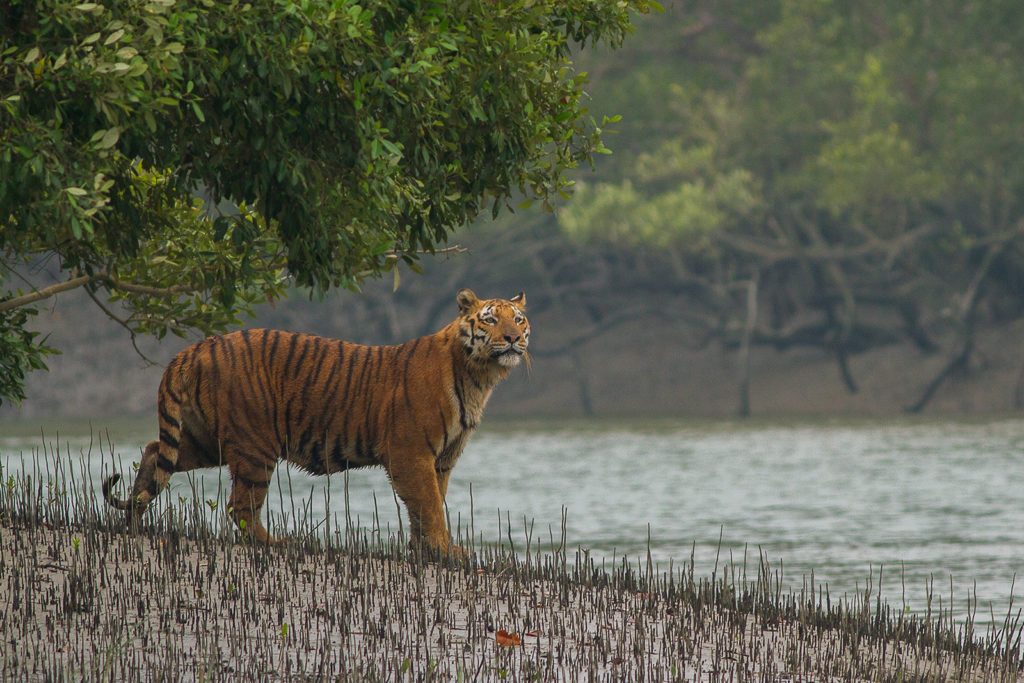
Sundarbans tourist attractions The Sundarbans, a unique eco-tourism destination, is the largest Mangrove Forest on earth and a UNESCO World Heritage Site. It stretches about 80km into the Bangladeshi and Indian mainland from the coast of the Bay of Bengal. 60% of this mist-shrouded forest is located in Bangladesh.
Though this 10,500km2 forest area is surrounded by two of the most densely populated country on three sides, it remains remote, inhospitable and largely uninhabited by people. Intersected by a complex network of rivers and creeks, mudflats and tiny islands, this amazing forest is comprised of two elementary ecoregions: The Mangrove Forest and the Freshwater Swamp Forest. The word Sundarbans means a beautiful forest. However, the name derived from the “Sundari” trees which are seen here plentifully. This forest is mainly famous for the Royal Bengal Tiger but you’ll also see here the spotted deer, saltwater crocodiles, and different types of birds. This huge forest provides habitat for 42 species of mammal, 290 species of bird, 120 species of fish, 50 species of reptiles and 8 species of amphibian.









 Travel In Bangladesh